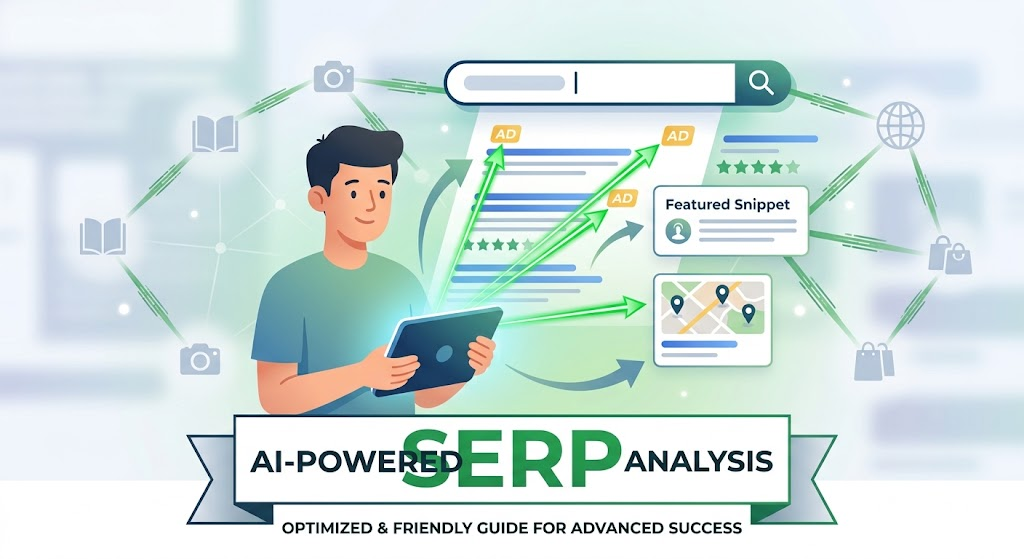
Have you ever typed a question into Google and hit enter? The page that pops up right after you press that button has a special name. It is called a SERP.People in the tech world use this word all the time. But what does it actually mean? SERP stands for Search Engine Result Page. Think of it as a digital map. When you ask a search engine a question, it looks all over the internet to find the best answers. Then, it puts those answers neatly onto one page for you to look at.Without a SERP, finding cool websites, fun games, or homework help would be super hard. It is like a giant library index that sorts through billions of pages in just a tiny fraction of a second. Every single time you search for something, a brand new SERP is made just for you based on what you typed.
The Magic Behind the Search Results Page
When you look at a SERP, you might think it just happens by magic. But a lot of cool science and computer programming goes into making it.
Search engines use smart computer programs called crawlers. These programs zoom around the internet looking at every page they can find. They read the words, look at the pictures, and figure out what each website is about. When you type words into the search bar, the search engine matches your words with the pages it has stored in its memory.
The main goal of any SERP is to give you the exact answer you want right away. If you search for how to bake a cake, the page will show you recipes. If you search for the capital of France, it will give you the city name right at the top. The better the search engine understands you, the better the SERP will be.
Different Parts of a Search Engine Page
A standard SERP is not just a boring list of blue links anymore. It has many different cool pieces that help you find information faster.
At the very top, you might see ads. Companies pay money so their websites show up there. Below the ads, you will often find special boxes. Sometimes there is a big box that answers your question right away without you having to click anything. This is called a featured snippet.
Other times, the SERP will show you images, videos, or a map if you are looking for a nearby store. There is also a section called “People Also Ask” where you can see more questions related to what you just typed. Learning how to read all these different parts of a SERP makes you a pro at finding stuff online.
Why Organic Results Are So Special
Have you ever noticed that some links on a SERP say “Sponsored” next to them, while others do not? The ones without that label are called organic results.
Organic results are super important because money cannot buy them. Search engines put them there simply because they think those websites are genuinely helpful and trustworthy. Website owners work hard for months or even years to get their pages to show up in these organic spots.
When a website appears high up on the SERP naturally, it means people trust it. Building a great website with awesome content is the only way to win these top organic spots. It takes patience, creativity, and a lot of good writing to make it happen.
Paid Results Versus Free Results
It helps to know the difference between the paid ads and the free organic links on a SERP. Both show up on the page, but they work in totally different ways.
Paid results are like billboards on the highway. Companies pay the search engine a fee every single time someone clicks on their ad. As soon as they stop paying, their ad goes away.
On the other hand, organic results are like planting a garden. You water it, take care of it, and eventually, it grows big and strong. It stays there for a long time without you having to pay for every single visitor. Both types of results live together on the same SERP, giving users a mix of choices every time they search.
How Search Engines Choose What Goes First
Have you ever wondered how a search engine decides which website gets the number one spot on a SERP? It follows a strict set of rules called an algorithm.
This algorithm looks at hundreds of clues to figure out which page is the best. It checks if the website has the right keywords, if the page loads quickly, and if other websites link to it. If a lot of people like a website and share it, the search engine thinks, “Hey, this must be a really good page!” and pushes it higher up on the SERP.
Search engines change their rules a little bit all the time to stop cheating and to make sure the best answers always win. That is why websites have to keep updating their content to stay relevant.
Why Understanding SERPs Helps You Learn
Knowing how a SERP works is a superpower for doing school research and finding fun facts online.
Instead of clicking the very first link every single time, you can look at the whole page. You can check if there is a video that explains it better, or read the quick summary box at the top. If the first few links do not give you what you want, you know how to scroll down and look at other options, or change the words in your search.
When you understand how search engines sort information, the internet becomes a much friendlier and easier place to explore. You spend less time clicking random links and more time finding cool, accurate answers.
Fun Facts About Search Engine Pages
Search engine result pages have changed a lot since the internet first started. A long time ago, a SERP was just a plain white page with simple blue text links and nothing else.
Today, they are packed with cool features like voice search integration, interactive calculators, and instant translation tools. Did you know that the look of a SERP can even change depending on whether you are using a phone or a computer? On a phone, the page is designed to be easy to scroll with your thumb, while a computer screen shows more links side by side.
Tech companies are always testing new designs to make the SERP faster and more helpful for millions of users around the globe every single day.
Biography Table: The Evolution of Search Pages
| Year / Era | Milestone in Search History | What the SERP Looked Like |
| 1990s | Early Search Engines | Simple text-only pages with basic blue hyperlinks. |
| 2000s | Growth of Modern Search | Introduction of sponsored ads alongside organic results. |
| 2010s | Rich Snippets & Knowledge Graphs | Addition of direct answer boxes, images, and maps. |
| Today | AI Overviews & Mobile First | Highly interactive pages with smart summaries and video carousels. |
Frequently Asked Questions (FAQs)
1. What does SERP stand for?
SERP stands for Search Engine Result Page. It is the page you see after typing a question into a search engine like Google.
2. Are all results on a SERP free?
No. Some results at the top are paid advertisements, while the rest are free organic results earned through good content.
3. Why do search results change?
Search engines update their algorithms and look at user behavior to make sure the best and most helpful answers stay at the top.
4. How can a website get to the top of a SERP?
Websites use SEO (Search Engine Optimization) to make their pages fast, helpful, and easy for search engines to read.
5. What is a featured snippet?
A featured snippet is a special answer box that appears at the very top of a SERP to give you an instant answer.
6. Do mobile phones show different search results?
Yes. A SERP on a mobile phone is often formatted differently to fit smaller screens and touch controls.